.png "Printer lifespan and sustainable printing")
Why Printer Lifespan Matters for Sustainability
Key Takeaways: Why Printer Lifespan Matters for Sustainability
- Sustainable printing is about more than paper and energy usage. The way devices are manufactured, maintained and replaced also matters.
- Planned refresh cycles give businesses more control. Devices should be replaced when it makes operational sense, not because reliability has become a problem.
- Predictive maintenance can reduce downtime, unnecessary engineer visits and overstocking of consumables.
- Longer-life devices, recycled materials and better lifecycle management can help reduce waste while keeping costs under control.
- Upgrading to Windows 11 helps your business stay secure, compliant, and future-ready.
- Asset finance can spread the cost of new hardware and infrastructure upgrades.
- Operating leases provide flexibility and reduce upfront capital investment.
The most sustainable printer is often the one you don’t need to replace.
When we talk to businesses about sustainable printing, the focus is usually on reducing paper or lowering energy consumption. These things are important, but we believe they are only part of the picture.
As well as paper and energy usage, the environmental impact is much wider-reaching and includes how the devices are manufactured, maintained, replaced and even transported. A common theme we have noticed is businesses replacing photocopiers earlier than necessary which creates avoidable operational costs and unnecessary waste in the process.
We believe that printer lifecycle should play a much bigger role in sustainable print infrastructure. Devices built to last longer, with predictable maintenance needs and fleets which give you a better understanding of how each device is performing play a huge part in keeping the total cost of ownership down, reducing waste and avoiding the disruption that comes with constantly replacing machines.
Sustainability is More Than Just Energy Consumption
When we assess the sustainability of a print environment for our customers, energy efficiency is something they mention early on. Things like low-power and sleep modes and reduced paper usage all play an important part, but we believe that there is much more to a sustainable print device than this.
Businesses often overlook the environmental cost of a photocopier long before it reaches the office. Raw materials need to be sourced, components produced and devices manufactured before they are packaged and transported through global supply chains.
This environmental impact is amplified when businesses invest in devices which were never designed with long-term operational lifespan in mind. When these devices are replaced unnecessarily early, the environmental impact is repeated far sooner than it needs to be, contributing to shorter replacement cycles and greater long-term waste.
Why Printer Lifespan Matters
One of the most common assumptions we come across is that business printers and photocopiers are only expected to last three to five years. While many organisations choose to refresh their print fleet around this point, that doesn't necessarily mean the devices themselves have reached the end of their useful life.
We regularly see businesses replacing machines because reliability has become an issue rather than because the technology is no longer suitable for their needs. In many cases, the real problem is that the devices were never designed to cope with the demands placed upon them over the long term.
We believe there is an important difference between a planned refresh and a forced replacement. A planned refresh gives businesses the opportunity to take advantage of new technology, security features and workflow improvements. A forced replacement often comes after a period of increasing downtime, rising maintenance costs and growing frustration from users.
From a sustainability perspective, longer-life devices give businesses more choice. They provide the flexibility to refresh infrastructure when it makes operational sense rather than because reliability concerns leave no other option. That reduces waste, avoids unnecessary disruption and helps organisations get greater value from their investment.
The Business Cost of Replacing Devices Too Early
The true cost of replacing a printer or photocopier is often greater than many businesses realise. While the purchase price of a new device is easy to quantify, the wider costs associated with replacement are often overlooked.
Replacing equipment involves more than simply swapping one machine for another. New devices need to be sourced, delivered, installed and set up, while staff may need time to adapt to new hardware and workflows. Existing consumables may no longer be compatible, creating additional waste and expense.
Alongside the operational disruption, there is also the environmental impact of replacing equipment. Every new device has to be manufactured, transported and installed, while the old machine must be repurposed, recycled or disposed of. When devices are replaced earlier than necessary, that environmental impact is repeated far sooner than it needs to be.
This is one of the reasons we believe operational efficiency and sustainability are closely linked. Every time a business replaces a device unnecessarily, it incurs costs in time, resources and materials that are rarely reflected in the purchase price alone.
When assessing the true cost of a print environment, it is important to look beyond the initial investment and consider the total cost of ownership. A device that remains reliable and productive throughout its intended lifecycle can often deliver greater long-term value than one that appears cheaper upfront but requires earlier replacement.
How Predictive Maintenance Reduces Waste
One of the biggest reasons devices are replaced prematurely is that problems are often dealt with reactively. A printer develops a fault, performance starts to deteriorate or downtime becomes more frequent, and replacement begins to look like the easiest option.
We believe a better approach is to identify and resolve issues before they affect users. Advances in predictive maintenance and remote monitoring now make this possible for many organisations.
Modern print devices are capable of providing valuable information about their performance, usage and maintenance requirements. This allows potential issues to be identified early, helping to prevent unexpected failures and extend the usable life of the equipment.
Predictive maintenance also reduces waste in other ways. Many managed print services can automatically monitor toner levels and arrange replenishment based on actual usage, reducing the need to hold excessive stock while helping to ensure devices remain operational.
Remote support is another important factor. Many issues that would previously have required an engineer visit can now be diagnosed and resolved remotely. In fact, Lexmark reports that over 68% of service issues can be resolved without an on-site visit.
This can reduce unnecessary callouts, prevent avoidable downtime and help devices remain productive for longer. It also supports both operational efficiency and sustainability. Rather than waiting for equipment to fail, businesses can take a more proactive approach to managing their print infrastructure.
Recycled Materials and the Circular Economy
While extending the lifespan of a device is one way to reduce environmental impact, it is not the only factor businesses should consider. The materials used to manufacture equipment also play an important role.
One factor is the use of post-consumer recycled (PCR) plastics. Put simply, PCR plastics are materials that have been recovered from products that have already been used and recycled, reducing the demand for new raw materials.
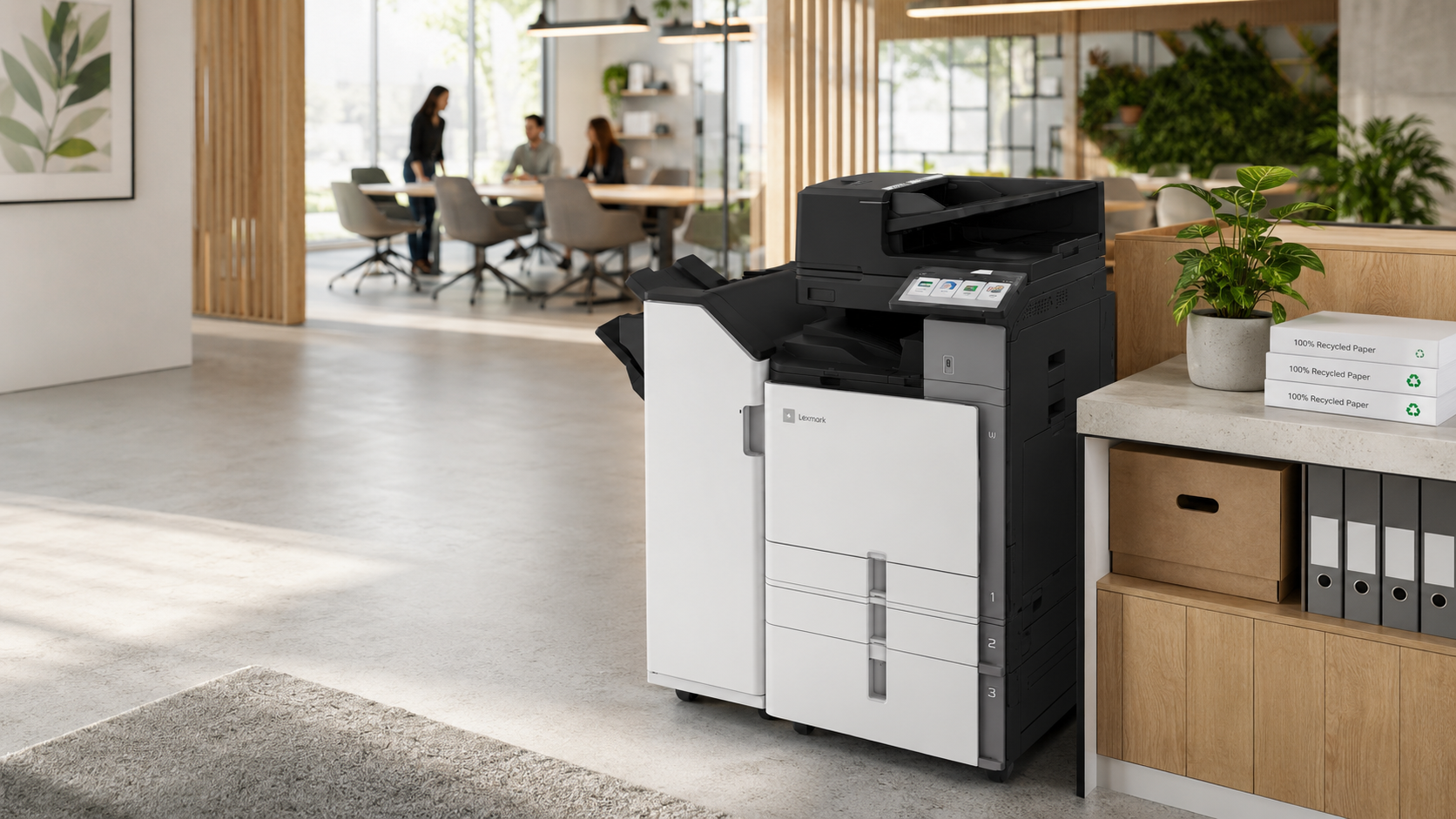
Many manufacturers are now incorporating recycled materials into their devices as part of a wider effort to support a more circular approach to production. For example, Lexmark states that its 9-Series printers and multifunction devices contain between 56% and 73% recycled plastic, helping to reduce the amount of virgin material required during manufacturing. Lexmark also states that its 9-Series devices are designed and built to last seven years or more.
The principles of the circular economy extend beyond the device itself. Cartridge collection and recycling programmes help recover materials that can be reused, while equipment recycling initiatives aim to ensure devices are responsibly repurposed or recycled at the end of their working life.
We believe the most effective sustainability strategies look at the entire lifecycle of a product rather than focusing on a single stage. Longer device lifespans, recycled materials and responsible recycling programmes all have a role to play. Together, they can help businesses reduce waste and lower their overall environmental impact without compromising operational performance.
Sustainable Printing Requires Lifecycle Thinking
Throughout this article, we've talked about device lifespan, maintenance and recycling programmes. While these are all important, they only form part of the picture.
We believe the biggest shift businesses can make is changing the way they think about print infrastructure. Too often, printers and photocopiers are treated as standalone purchases rather than assets that support day-to-day operations.
The organisations that tend to get the most value from their print environment are usually those that take a longer-term view. They have a clearer understanding of how their devices are performing, they maintain them properly and they make replacement decisions as part of a wider strategy rather than simply reacting to problems as they arise.
In our experience, sustainability and operational efficiency are often closely linked. Businesses that reduce unnecessary waste, avoid premature replacement and make better use of the equipment they already have will often see benefits that go far beyond environmental impact alone.
How Businesses Can Improve Print Sustainability
Improving print sustainability often comes down to the decisions made throughout the lifecycle of a device.
Some practical steps businesses can take include:
- Review print usage regularly to understand how devices are being used and where unnecessary printing may be occurring.
- Avoid oversized print fleets by ensuring the number and type of devices reflects actual business requirements.
- Standardise devices where possible to simplify support, reduce training requirements and improve consumables management.
- Maintain equipment proactively rather than waiting for issues to develop into faults that affect productivity.
- Monitor consumables carefully to avoid excessive stockholding while ensuring devices remain operational.
- Invest in printers and photocopiers that are built to remain reliable throughout their intended lifecycle, reducing the likelihood of premature replacement.
- Avoid reactive replacement cycles by planning refreshes strategically rather than replacing equipment only when problems occur.
- Assess whether devices have genuinely reached end-of-life before deciding on replacement, taking into account performance, reliability and ongoing support options.
Frequently Asked Questions
How long should a business printer last?
The lifespan of a business printer depends on its design, usage and maintenance. While many organisations choose to refresh their print fleet every three to five years, well-engineered devices can often remain reliable and productive for significantly longer. The key is ensuring equipment is properly maintained and suitable for the demands of the environment in which it operates.
Is repairing a printer more sustainable than replacing it?
In many cases, yes. Extending the life of an existing device can reduce waste and avoid the environmental impact associated with manufacturing and transporting a replacement. However, there may come a point where reliability, efficiency or support limitations make replacement the more practical long-term option.
What makes a printer environmentally friendly?
Energy efficiency is only one consideration. Device lifespan, recycled materials, consumable management and recycling programmes also affect the environmental impact of a printer. A sustainable device should remain productive and reliable throughout its intended lifecycle.
What are PCR plastics in printers?
PCR stands for post-consumer recycled plastic. These materials are recovered from products that have already been used and recycled before being incorporated into new products. Using PCR plastics helps reduce demand for virgin raw materials and supports a more circular approach to manufacturing.
How do managed print services support sustainability?
Managed print services can help organisations reduce waste by improving visibility over print usage, monitoring device performance, automating consumable replenishment and supporting proactive maintenance. This can help extend device lifespan, reduce unnecessary replacements and improve the overall efficiency of a print environment.
Taking a Longer-Term View of Print Sustainability
The most sustainable printer is often the one you do not need to replace.
Paper usage and energy efficiency will always be important, but they are only part of the picture. The lifespan of a device, how well it is maintained and whether it is replaced at the right time can have just as much impact.
Businesses should be able to decide when it makes sense to refresh their print equipment. They should not be forced into replacement because machines have become unreliable, faults are becoming more frequent or maintenance costs are starting to rise.
This is where better visibility makes a difference. A print audit can help businesses understand how their current devices are performing, while a managed print service can help keep equipment maintained, monitor usage and reduce avoidable waste.
At Lex, we help businesses take a closer look at their print environment and make decisions based on what they actually need.




Latest News & Insights